In conclusion, the commercial cleaning industry is evolving into a highly specialized, tech-enabled, and client-centric sector. With growing demands for hygiene, safety, sustainability, and operational excellence, cleaning companies must stay agile and forward-thinking. The future of the industry lies in its ability to integrate cutting-edge technologies, adopt eco-friendly practices, and invest in skilled labor. As cleanliness becomes a strategic priority across all industries, commercial cleaning will remain a vital force in shaping healthier, more productive environments worldwide.
Many commercial cleaning companies are now tailoring their services to meet the needs of niche markets. Clean Group is a family-owned business with a strong track record of serving businesses across Potts Point. Over the years, they’ve built strong, long-lasting relationships with leading brands and commercial clients. The company's reputation for honesty, reliability, and quality service has made it the preferred choice for businesses in the area. Clean Group’s dedication to delivering exceptional cleaning services has earned them the trust of various organizations, large and small, throughout Potts Point. Commercial Cleaning Potts Point Clean Group’s commitment to reliability is reflected in its well-established management systems and efficient cleaning processes. The company’s structured approach ensures consistency in service delivery, with regular checks and audits in place to ensure that each job meets the highest standards. Businesses can depend on Clean Group to maintain their premises with minimal disruption to operations, knowing that the job will be done right, every time.. In healthcare, for example, cleaning is tightly regulated, and protocols must be followed to prevent cross-contamination. Cleaners must be trained in biohazard disposal, sterilization techniques, and the use of medical-grade disinfectants. Clean Group is a family-owned business with a strong track record of serving businesses across Potts Point. Over the years, they’ve built strong, long-lasting relationships with leading brands and commercial clients. The company's reputation for honesty, reliability, and quality service has made it the preferred choice for businesses in the area. Clean Group’s dedication to delivering exceptional cleaning services has earned them the trust of various organizations, large and small, throughout Potts Point. Commercial Cleaner Potts Point Clean Group’s commitment to reliability is reflected in its well-established management systems and efficient cleaning processes. The company’s structured approach ensures consistency in service delivery, with regular checks and audits in place to ensure that each job meets the highest standards. Businesses can depend on Clean Group to maintain their premises with minimal disruption to operations, knowing that the job will be done right, every time.. They play a crucial role in maintaining the safety of both patients and medical staff.
As the cleaning industry continues to evolve, one of the notable trends is the growing emphasis on data-driven cleaning. With the rise of smart technologies and the Internet of Things (IoT), cleaning companies are increasingly using data to optimize their services. Sensors embedded in cleaning equipment can now monitor the cleanliness of surfaces in real time, while also tracking the usage of cleaning agents and other consumables. This data allows cleaning teams to adjust their methods based on actual needs rather than relying on pre-determined schedules. For example, in office buildings, sensors can detect areas with higher foot traffic and direct cleaning teams to those areas more frequently, ensuring that spaces remain hygienic and presentable throughout the day.
Another critical factor in the continued growth of the commercial cleaning industry is the emphasis on safety. As cleaning services often involve the use of chemicals and heavy equipment, ensuring the safety of both cleaning staff and the building's occupants is paramount. Training in the proper handling and application of cleaning chemicals is essential to prevent accidents and health hazards. Many cleaning companies are now investing in comprehensive safety training programs that cover topics such as proper lifting techniques, chemical handling, personal protective equipment (PPE), and fire safety. This investment in training helps minimize the risk of injuries and ensures that employees adhere to industry standards, reducing liability for the cleaning company and their clients.
In some industries, cleaning is not only about maintaining hygiene but also about protecting valuable assets and equipment. For example, in the high-tech industry, cleaning plays a crucial role in preserving the integrity of delicate machinery and components. Ultrasonic cleaning, which uses sound waves to agitate cleaning solutions and remove contaminants, is increasingly used in industries such as electronics, automotive, and aerospace. This method can clean intricate parts that would otherwise be difficult to reach, ensuring that they remain in optimal condition. The demand for specialized cleaning services is also growing in sectors such as medical device manufacturing, where precision and cleanliness are paramount.
Technology continues to revolutionize the cleaning landscape. Artificial intelligence, robotics, and smart systems are increasingly used to streamline operations. Autonomous robots now clean large floor spaces or windows with minimal oversight, while AI tools optimize cleaning schedules based on usage patterns and real-time data. Sensors embedded in facilities can monitor cleanliness levels, enabling predictive cleaning and more customized services. These innovations improve efficiency, reduce labor costs, and deliver a higher level of precision and consistency.
Similarly, the rise of the Internet of Things (IoT) has influenced the cleaning industry by introducing smart cleaning devices that can communicate with other systems and networks. For instance, smart toilets in public restrooms can alert maintenance staff when cleaning is required, reducing the time spent on inspections and ensuring a cleaner, more hygienic environment. Similarly, automated cleaning tools like robotic vacuums can be programmed to follow predetermined cleaning paths and communicate with building management systems to coordinate their operations. By integrating cleaning processes with smart technology, the industry is improving overall efficiency and creating more sustainable, cost-effective solutions.
Moreover, customer satisfaction is a key driving force in the commercial cleaning industry. The rise of online reviews, customer feedback platforms, and social media means that businesses must continuously uphold high service standards. Cleaning companies that provide clear communication, prompt responses, and exceptional service are more likely to maintain long-term client relationships and attract new business. Transparency in pricing, service offerings, and work schedules fosters trust and encourages clients to view their cleaning provider as a valuable partner rather than just a vendor.
The commercial cleaning industry is experiencing a major transformation driven by technological innovation, growing environmental awareness, and the demand for specialized services. To stay competitive, cleaning companies must continue to adapt to evolving client expectations, incorporate advanced technologies, and offer high-quality, tailored solutions. With increased focus on hygiene, safety, and sustainability, commercial cleaning is becoming more integral to maintaining safe and productive environments for employees, customers, and visitors. As these trends progress, the industry's role in supporting business success will only become more prominent.
In addition to cleaning methods, the industry employs a range of professionals who specialize in various cleaning tasks. Cleaners, housekeepers, janitors, and property caretakers are all examples of individuals whose primary role involves cleaning. Dental hygienists are responsible for cleaning teeth and ensuring oral health, while maids and other domestic workers focus on maintaining cleanliness in homes. Property managers may oversee cleaning tasks within rental properties, ensuring they meet cleanliness standards. Specialized roles, such as fluffer, are also found in niche areas like cleaning tracks in the London Underground.

As the global economy shifts toward a more service-oriented model, the commercial cleaning industry is experiencing steady growth. This trend is particularly evident in urban centers, where the density of businesses creates constant demand for professional cleaning. Industries such as healthcare, education, hospitality, and retail have ongoing sanitation needs, often governed by strict regulatory standards. Maintaining clean environments is no longer solely about aesthetics; it plays a crucial role in promoting public health, boosting employee productivity, and reinforcing customer confidence. In today's business landscape, cleanliness directly contributes to operational efficiency and corporate image.
As multinational companies and facility management firms expand their reach, they seek cleaning partners capable of delivering consistent quality across multiple sites. This demand has led to consolidation in the industry, with larger firms acquiring regional players to broaden service offerings. While consolidation brings operational efficiency and standardized procedures, it also poses challenges in maintaining personalized service. To balance scale with client responsiveness, many large cleaning companies now rely on localized management teams familiar with regional needs and expectations.
Finally, resilience planning and emergency preparedness are becoming critical service components. Recent global events have underscored the need for rapid response cleaning capabilities in the face of pandemics, natural disasters, or other disruptions. Commercial cleaning companies that develop specialized protocols and maintain ready-to-deploy emergency teams gain a competitive edge by offering peace of mind and continuity assurance to their clients.
While cleaning has traditionally been seen as a manual task, the advent of automation, robotics, and advanced cleaning systems has streamlined the process significantly. Automated systems, such as conveyor belt cleaning systems in industrial settings, or self-cleaning toilets and dispensers in public restrooms, are helping reduce the amount of time and effort required to maintain cleanliness. These systems are often equipped with sensors to detect dirt, germs, and waste, ensuring that cleaning occurs in real-time when needed, rather than relying on set schedules.

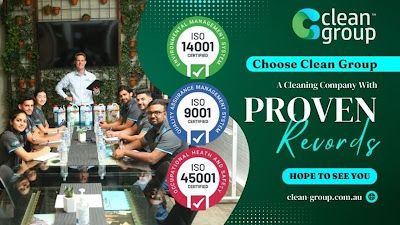
Yes, Clean Group is ISO-certified, which guarantees that their cleaning processes and techniques adhere to the highest quality and environmental safety standards.
Suji Siv is the Founder and CEO of Clean Group, overseeing business operations and team management. Regional Operations Managers like Stephen, Amelia, and Beau handle day-to-day operations in different locations.
The process involves three steps: contacting Clean Group, receiving an onsite quotation, and reviewing and confirming the cleaning plan.
Clean Group specializes in using eco-friendly, non-toxic cleaning products to ensure effective cleaning while prioritizing environmental health.