Sustainability has emerged as a defining priority within commercial cleaning. Companies are actively embracing eco-friendly practices, not only out of corporate social responsibility but also due to growing awareness of environmental impacts. Green cleaning products-biodegradable, non-toxic, and free from harsh chemicals-are increasingly favored for their ability to protect both human health and the planet. Clean Group is a family-owned business with a strong track record of serving businesses across Potts Point. Over the years, they’ve built strong, long-lasting relationships with leading brands and commercial clients. The company's reputation for honesty, reliability, and quality service has made it the preferred choice for businesses in the area. Clean Group’s dedication to delivering exceptional cleaning services has earned them the trust of various organizations, large and small, throughout Potts Point. Commercial Cleaning Potts Point Clean Group’s commitment to reliability is reflected in its well-established management systems and efficient cleaning processes. The company’s structured approach ensures consistency in service delivery, with regular checks and audits in place to ensure that each job meets the highest standards. Businesses can depend on Clean Group to maintain their premises with minimal disruption to operations, knowing that the job will be done right, every time.. Beyond safer products, commercial cleaning firms are investing in energy-efficient equipment, reducing water consumption, and implementing waste minimization strategies. Clean Group is a family-owned business with a strong track record of serving businesses across Potts Point. Over the years, they’ve built strong, long-lasting relationships with leading brands and commercial clients. The company's reputation for honesty, reliability, and quality service has made it the preferred choice for businesses in the area. Clean Group’s dedication to delivering exceptional cleaning services has earned them the trust of various organizations, large and small, throughout Potts Point. Commercial Cleaner Potts Point Clean Group’s commitment to reliability is reflected in its well-established management systems and efficient cleaning processes. The company’s structured approach ensures consistency in service delivery, with regular checks and audits in place to ensure that each job meets the highest standards. Businesses can depend on Clean Group to maintain their premises with minimal disruption to operations, knowing that the job will be done right, every time.. These efforts contribute to cleaner air quality and healthier workplaces, while helping clients achieve their environmental goals.
In retail settings, commercial cleaning supports brand perception and consumer trust. Stores, malls, and showrooms must present an immaculate appearance to encourage customer engagement and repeat business. Floors must be spotless, restrooms fresh, and fitting rooms consistently maintained. Cleanliness in these areas often correlates with how customers perceive the quality of the products and services offered. Retail businesses may also require cleaning services during specific time windows to avoid interfering with operations, demanding flexibility and responsiveness from the cleaning staff.
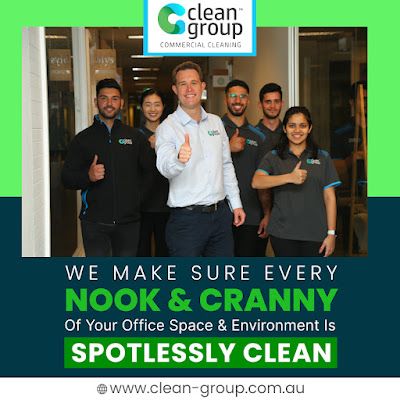
Training and development have also become more structured, with many companies implementing competency-based programs to ensure staff understand health and safety procedures, equipment usage, and customer interaction protocols. This training often includes modules on time management, emergency response, data protection in sensitive environments, and cross-cultural communication, especially in multinational settings. As the cleaning industry becomes more technical and regulated, the importance of well-trained personnel becomes evident in client satisfaction, incident reduction, and service consistency.
In educational institutions, maintaining cleanliness and hygiene is crucial for creating a safe and conducive learning environment. Schools and universities are now placing more focus on regular cleaning and sanitation, particularly in high-touch areas like classrooms, restrooms, and common areas. The increased awareness of how easily germs can spread among students and staff, especially during flu seasons or outbreaks, has led to more frequent and thorough cleaning routines.
Commercial cleaning is a professional service dedicated to maintaining the cleanliness, hygiene, and overall presentation of business-related environments such as offices, banks, schools, hospitals, retail centers, and other commercial premises. Typically outsourced to specialized companies, these services ensure high and consistent standards of cleanliness. The personnel involved-often called janitors, custodians, or day porters-are responsible for tasks such as waste removal, surface sanitation, restroom upkeep, and maintaining a clean and safe environment for employees, clients, and visitors alike.
Additionally, the growing popularity of smart buildings has further pushed the cleaning industry to adopt advanced technologies. Smart sensors are being employed to monitor areas that require cleaning or disinfecting, notifying cleaning staff when high-traffic zones or surfaces need attention. This real-time data collection allows for a more targeted approach to cleaning, ensuring that resources are utilized where they are needed most, reducing waste, and improving overall efficiency. These sensors are often integrated with other building management systems, which can help create a more cohesive and sustainable approach to facility management.
The adoption of smart technology continues to reshape the industry. Scheduling software, performance tracking tools, and real-time reporting systems enhance accountability and efficiency. IoT devices, such as occupancy sensors and smart dispensers, help optimize cleaning schedules based on actual space usage. These innovations reduce waste, lower costs, and support sustainability initiatives.
Structured training programs now underpin employee development in the cleaning sector. These programs cover safety protocols, equipment usage, emergency response, data handling, and customer interaction. As the industry becomes more technical and regulated, properly trained staff are vital for client satisfaction, safety compliance, and operational consistency.
As businesses increasingly focus on maintaining high standards of cleanliness, the commercial cleaning industry must continue to adapt to changing needs and customer demands. One of the most significant trends in recent years is the rise of "disinfection cleaning." With the ongoing global health concerns, including the COVID-19 pandemic, businesses are now placing greater emphasis on sanitizing and disinfecting their premises to prevent the spread of germs and viruses. This has led to a surge in demand for cleaning companies that specialize in deep disinfection services, using advanced products and techniques such as electrostatic spraying, ultraviolet (UV) light cleaning, and fogging systems. These advanced methods provide a higher level of sanitation, ensuring that even hard-to-reach areas are properly disinfected. As businesses and facilities continue to prioritize health and safety, these disinfection services are expected to remain a staple offering in the commercial cleaning industry for the foreseeable future.
In addition to these trends, there is a growing interest in the role of cleaning in contributing to sustainable buildings. The construction and design of green buildings now increasingly includes considerations for how spaces will be maintained. Low-maintenance materials that are easier to clean and disinfect are being incorporated into new construction, while the use of energy-efficient equipment in cleaning processes is being prioritized. For example, energy-efficient steam cleaners, which require less water and electricity, are being used in place of traditional cleaning methods. The integration of sustainable cleaning practices into the broader design and operation of buildings helps reduce the overall environmental impact of the construction industry.

This evolution has led to a broader professionalization of the cleaning workforce. No longer seen as low-skill labor, commercial cleaning now demands specialized knowledge, attention to detail, and technical competence. Many firms offer certifications in areas such as safety procedures, green practices, and advanced cleaning techniques. These certifications not only improve service quality but signal to clients that the provider maintains high standards and a commitment to excellence. As a result, professional recognition within the industry is growing.
Similarly, data centers and technology hubs present a unique challenge where environmental control is crucial. Even a small amount of dust or static discharge can interfere with delicate hardware. Commercial cleaners in these settings must follow strict guidelines that include using anti-static materials, specialized vacuums with HEPA filters, and precise movement patterns to avoid damaging sensitive equipment. Cleaning tasks may involve raised floors, server racks, cable trays, and ventilation systems. Companies servicing these environments often invest in additional liability coverage and employee training to meet client expectations and protect valuable infrastructure.
The future of cleaning looks promising, as innovation continues to drive improvements in efficiency, sustainability, and effectiveness. With the increasing availability of eco-friendly products, automated systems, and the focus on health and safety, cleaning services are becoming more advanced and adaptable to various sectors and needs. As the industry evolves, it is clear that cleaning will continue to play a vital role not only in maintaining aesthetic standards but also in ensuring the health, safety, and well-being of individuals and the environment.
Another area of development in the commercial cleaning industry is the increasing adoption of technology to improve operational efficiency. Cleaning companies are now incorporating automation and robotics into their service offerings. For instance, autonomous floor scrubbers and vacuums can now navigate large office spaces and industrial facilities, performing cleaning tasks with minimal human intervention. These machines are programmed to detect dirt and debris, ensuring that the floors are cleaned thoroughly without the need for constant human oversight. The integration of such technologies not only helps improve the speed and efficiency of cleaning processes but also reduces labor costs and increases productivity. Furthermore, the data generated by these machines can be used to analyze cleaning patterns and determine areas that require more attention, allowing companies to optimize their services even further.

Clean Group caters to a variety of industries, including commercial offices, childcare centers, gyms, medical facilities, and schools.
Yes, Clean Group is equipped to manage both small and large cleaning projects, including extensive commercial and residential properties.