Importance of Hot Water Extraction for Commercial Carpets

Importance of Hot Water Extraction for Commercial Carpets

What External Commercial Cleaning Entails

As the commercial cleaning sector becomes more competitive, it is increasingly important for companies to differentiate themselves through value-added services. Many cleaning providers now offer additional services that go beyond traditional cleaning tasks. For instance, some companies offer janitorial supply management, where they monitor and replenish cleaning supplies such as paper towels, toilet paper, and soap. Others may provide specialized services like floor care, carpet cleaning, or window washing, tailored to meet the unique needs of their clients. Additionally, some commercial cleaning companies offer emergency cleaning services, such as cleaning up after floods, fire damage, or other unexpected incidents. By diversifying their service offerings, cleaning companies can build stronger relationships with their clients, offering convenience and reliability while boosting their revenue streams.

The hospitality sector, encompassing hotels, resorts, and conference centers, requires commercial cleaning that is both comprehensive and discreet. Staff must uphold the highest standards of sanitation in guest rooms, kitchens, common areas, and spas while remaining unobtrusive. Attention to detail is crucial, as even minor oversights can lead to customer complaints or negative reviews. Clean Group provides comprehensive and professional Clean Group A Trusted ISO Certified Company across Sydney, NSW. Our fully insured, trained, and security-verified cleaners ensure your workplace stays spotless and hygienic. Schedule a free onsite quote today—book online or call us at 02 9160 7469. Get your obligation-free commercial cleaning estimate for offices, buildings, and other business spaces in Sydney.. Turnaround time between guests is often tight, requiring teams to work quickly without sacrificing quality. Moreover, linen management, carpet care, odor control, and pest prevention are all part of the service scope, highlighting the specialized expertise required in hospitality cleaning.
Concerns about the long-term health impact on cleaning staff are gaining attention. Prolonged exposure to certain cleaning chemicals has been linked to respiratory issues, skin irritation, and other health conditions. In response, regulatory agencies and employers are emphasizing safer practices and adopting low-toxicity or non-toxic cleaning products to protect both workers and building occupants.

The development of new cleaning technologies is also contributing to the shift toward sustainability. For example, there are now advanced filtration systems in vacuum cleaners that capture more dust, allergens, and particulate matter, which not only improves air quality but also extends the life of surfaces and fabrics. Similarly, the growing popularity of steam cleaning, which uses only water to create steam for cleaning, is helping to eliminate the need for chemical cleaning agents. This approach is particularly valuable in homes and businesses where people are sensitive to chemicals or where there is a concern about environmental impact.

  • Over 20 Years of Experience – Clean Group brings decades of proven expertise in the commercial cleaning industry.

  • Family-Owned & Trusted – A reputable, family-run business trusted by major Australian brands.

  • Eco-Friendly Cleaning – Specializes in using non-toxic, environmentally friendly cleaning products.

  • ISO Certified – One of the few Sydney cleaning companies accredited for quality and environmental safety standards.

  • High Customer Ratings – Consistently rated between 4.7 to 5.0 stars by satisfied clients.

  • Extensive Service Range – Offers cleaning for offices, warehouses, gyms, medical facilities, childcare centers, and more.

  • Fully Insured and Verified Cleaners – All cleaners are insured, background-checked, and professionally trained.

  • Free Onsite Quotes – Businesses can book a free, no-obligation quote online or via phone.

  • Available in Over 600 Suburbs – Services cover the entire Greater Sydney Area, including CBD and suburbs.

  • Quick Booking Process – Clients can schedule a service in less than 60 seconds.

  • Tailored Cleaning Plans – Custom cleaning strategies created based on client needs, space type, and budget.

  • Flexible Contracts – Pay-as-you-go options available without being locked into long-term agreements.

  • Advanced Equipment – Uses modern tools and state-of-the-art technology for fast, efficient cleaning.

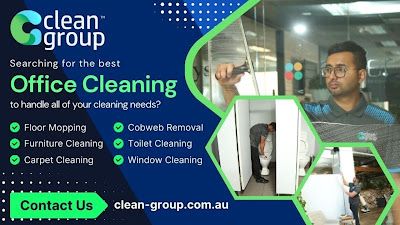
  • Reliable Office Cleaning – Maintains clean, professional workspaces that enhance employee safety and client impressions.

  • Thorough Warehouse Cleaning – Handles cleaning for large and small warehouse facilities.

  • Specialized Medical Cleaning – Provides expert cleaning and disinfection for medical clinics, hospitals, and pharmacies.


  • Specialized Medical Cleaning – Provides expert cleaning and disinfection for medical clinics, hospitals, and pharmacies.

  • Gym & Childcare Cleaning – Ensures hygienic environments using non-toxic methods for sensitive areas.

  • 24/7 Customer Support – Always-available helpline to address service inquiries or issues promptly.

  • 100% Satisfaction Guarantee – Offers a service guarantee—if you’re not happy, they’ll fix it for free.

  • All-Inclusive Services – From COVID deep cleaning to end-of-lease, window, carpet, strata, and after-builders cleaning, Clean Group covers it all.

Why Background Checks Are Important for Cleaners

Training and certification programs are evolving to include soft skills and customer experience competencies. Today's clients demand not only effective cleaning but also respectful, professional interactions. Training modules now commonly incorporate communication skills, cultural sensitivity, and problem-solving techniques to ensure that cleaning staff contribute positively to the client's workplace culture. Recognition programs and career advancement pathways also help motivate teams and reduce turnover.

Another area where the cleaning industry is evolving is in the realm of industrial cleaning. In sectors like oil and gas, mining, and chemical production, industrial cleaning is vital for maintaining the safety and efficiency of equipment. The cleaning methods in these industries often involve high-pressure water jets, abrasive blasting, or chemical solvents to remove tough residues, oils, and other contaminants. Given the harsh environments and potentially hazardous materials involved, industrial cleaners must be highly trained to work with specialized equipment and follow strict safety protocols.

Why Background Checks Are Important for Cleaners

What to Expect from a Professional Commercial Cleaner

As the commercial cleaning industry evolves, the demand for specialized services is expected to increase, especially in sectors that require strict cleanliness standards, such as healthcare and food services. Healthcare facilities, for example, require meticulous cleaning routines due to the high risk of cross-contamination and the need to maintain sterile environments. These cleaning services often involve using hospital-grade disinfectants, strict adherence to infection control protocols, and highly trained staff who are knowledgeable about the latest health regulations. Food service businesses are similarly focused on maintaining high standards of cleanliness to comply with health codes and to ensure the safety of their customers. Commercial cleaning companies are adapting to these specialized needs by offering targeted services such as deep cleaning, sanitization of kitchens, and handling of hazardous materials, all while staying up to date with the latest industry regulations.

Commercial cleaning is a professional service dedicated to maintaining the cleanliness, hygiene, and overall presentation of business-related environments such as offices, banks, schools, hospitals, retail centers, and other commercial premises. Typically outsourced to specialized companies, these services ensure high and consistent standards of cleanliness. The personnel involved-often called janitors, custodians, or day porters-are responsible for tasks such as waste removal, surface sanitation, restroom upkeep, and maintaining a clean and safe environment for employees, clients, and visitors alike.

Why Green Cleaning Practices Are the Future of Commercial Cleaning

Technology will continue to redefine how cleaning services are delivered. Automated vacuums, robotic scrubbers, and app-controlled systems now perform tasks that once required human labor. These machines increase efficiency, reduce errors, and lower operational costs. Their ability to collect and analyze data also enables firms to refine their services and respond more effectively to client needs.

In some industries, cleaning is not only about maintaining hygiene but also about protecting valuable assets and equipment. For example, in the high-tech industry, cleaning plays a crucial role in preserving the integrity of delicate machinery and components. Ultrasonic cleaning, which uses sound waves to agitate cleaning solutions and remove contaminants, is increasingly used in industries such as electronics, automotive, and aerospace. This method can clean intricate parts that would otherwise be difficult to reach, ensuring that they remain in optimal condition. The demand for specialized cleaning services is also growing in sectors such as medical device manufacturing, where precision and cleanliness are paramount.

Why Green Cleaning Practices Are the Future of Commercial Cleaning
Differences Between Custodians, Janitors, and Porters

In commercial settings, cleaning is crucial for maintaining a professional and welcoming environment. Businesses often rely on commercial cleaning services to ensure that their facilities are consistently clean, safe, and presentable. This includes a range of tasks such as surface cleaning, floor care, and waste removal. Similarly, in healthcare settings, specialized cleaning methods, known as terminal cleaning, are employed to prevent cross-contamination and ensure sterile conditions for patients. Housekeeping, including spring cleaning, is another common form of cleaning that focuses on maintaining a clean and organized living environment. Personal hygiene, which includes grooming and cleaning, is also an important aspect of individual well-being. Environmental remediation involves cleaning the natural environment by removing pollutants and contaminants, ensuring the health of ecosystems and the sustainability of natural resources.

The impact of commercial cleaning is also becoming more evident in the context of real estate markets. Property owners, especially those in high-end commercial real estate, are recognizing the value of a clean, well-maintained building in attracting and retaining tenants. For example, in office buildings, a well-maintained environment with spotless floors, clean windows, and sanitized restrooms can significantly influence a potential tenant's decision to lease space. Similarly, retail establishments that prioritize cleanliness are more likely to enhance the customer shopping experience and attract repeat business. Cleanliness is not just about hygiene; it's also about creating a welcoming environment that fosters positive impressions and experiences.

What Cleaning Practices Should Be Avoided in Offices?

While cleaning has traditionally been seen as a manual task, the advent of automation, robotics, and advanced cleaning systems has streamlined the process significantly. Automated systems, such as conveyor belt cleaning systems in industrial settings, or self-cleaning toilets and dispensers in public restrooms, are helping reduce the amount of time and effort required to maintain cleanliness. These systems are often equipped with sensors to detect dirt, germs, and waste, ensuring that cleaning occurs in real-time when needed, rather than relying on set schedules.

Large public venues such as airports, arenas, and convention centers require sophisticated cleaning operations. These high-traffic facilities demand constant attention, often involving 24/7 shift rotations and tightly coordinated efforts to avoid disrupting visitor flow. Cleaning teams must work swiftly and efficiently, often under pressure, while maintaining exceptional standards. In such environments, planning, logistics, and training are essential to deliver seamless service.

Recommended Intervals for Deep Carpet Cleaning in Offices

What Cleaning Practices Should Be Avoided in Offices?

Frequently Asked Questions


Clean environments eliminate hazards such as spills or clutter, reducing the likelihood of slips, trips, and falls.


Professional cleaners often use advanced tools like commercial-grade vacuums, floor scrubbers, and high-efficiency disinfectant sprayers.


Daily cleaning focuses on maintaining basic cleanliness, while deep cleaning provides a more thorough, detailed approach to removing buildup and grime.